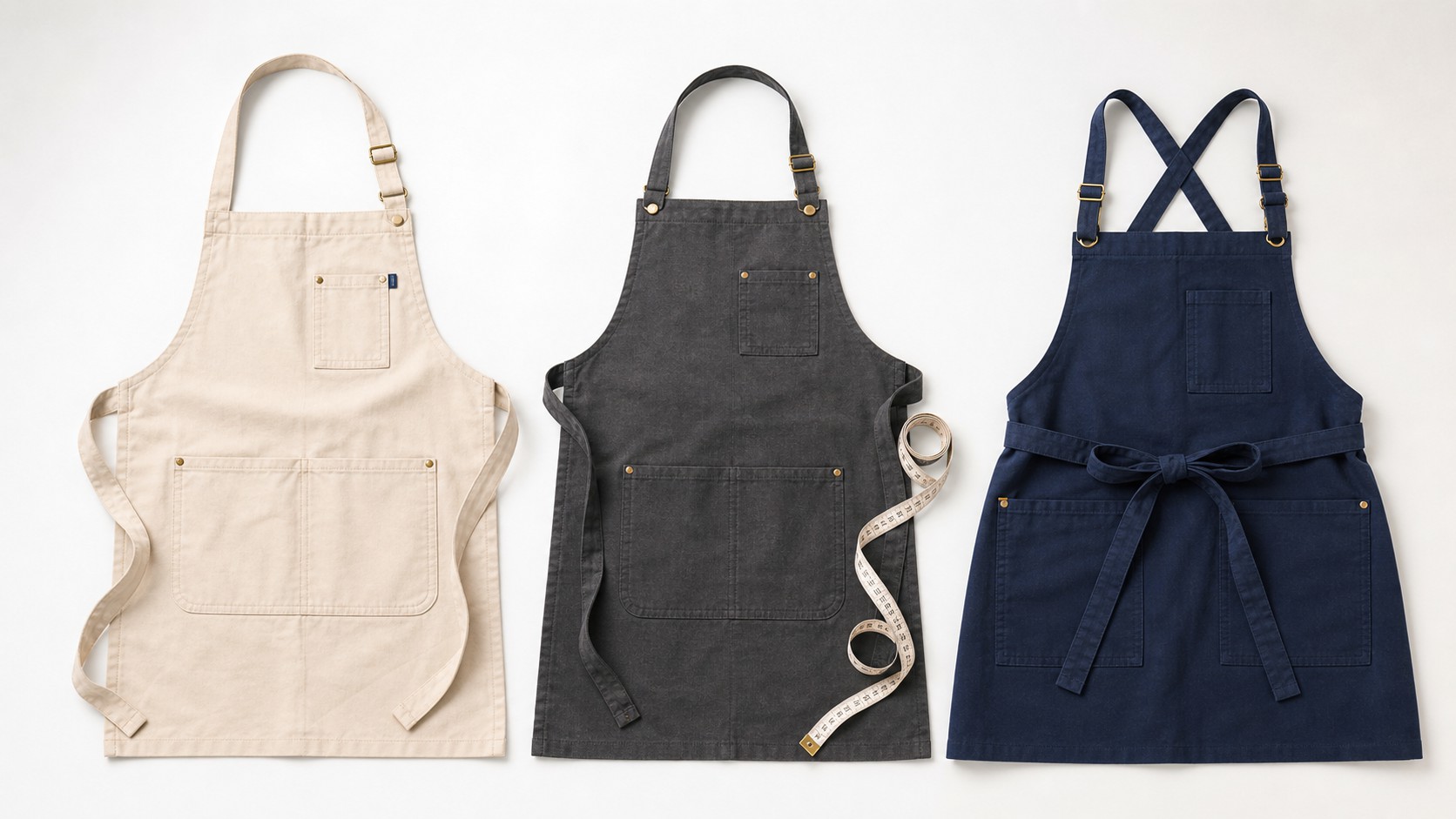
Palm circumference below the knuckles is the primary glove size reference; palm length confirms fit. Measure your dominant hand and match against your factory chart.
AI-generated summary
Apparel brand buyers searching for glove sizing standards usually hit a wall: consumer retail guides everywhere, factory-side production specs nowhere. You need to know how to measure hands, which size chart to embed in your tech pack, and how to communicate tolerances to a factory — not just "measure your palm and pick a letter."
The result of guessing? A full production run where the medium fits like a small, returns pile up, and your customer reviews tank before the second reorder. The fix is straightforward: use palm circumference as your primary measurement, palm length as your secondary check, and build a size chart that your factory can actually QC against.
This guide breaks down the measurement method, industry-standard size charts (men's, women's, and unisex), fit factors beyond the size label, and how to spec sizing for custom glove production — all from the factory side. Need a factory to validate your size chart against production patterns?
Glove Size Charts and Conversion Tables
Glove sizes use both letter codes (XS-XXL) and numeric codes (6-12), with palm circumference in inches or centimeters as the matching parameter. The tables below represent common industry standards; actual ranges may vary slightly by manufacturer.
Men's / Unisex Glove Size Chart
| Palm Circumference (in) | Palm Circumference (cm) | Palm Length (in) | Palm Length (cm) | Letter Size | Numeric Size |
|---|---|---|---|---|---|
| 7 | 18 | 6-6.5 | 15.5-16.5 | XS | 7 |
| 7.5-8 | 19-20.5 | 6.5-7 | 16.5-18 | S | 7.5-8 |
| 8.5-9 | 21.5-23 | 7.5-8 | 19-20 | M | 8.5-9 |
| 9.5-10 | 24-26 | 8.5-9 | 21.5-23 | L | 9.5-10 |
| 10.5-11 | 27-28.5 | 9-9.5 | 23-24 | XL | 10.5-11 |
| 11.5-12 | 29.5-30 | 9.5+ | 24.5+ | XXL | 11.5-12 |
Women's Glove Size Chart
| Palm Circumference (in) | Palm Circumference (cm) | Palm Length (in) | Palm Length (cm) | Letter Size | Numeric Size |
|---|---|---|---|---|---|
| 6 | 15 | 5.5-6 | 14.5-15.5 | XXS | 6 |
| 6.5 | 16.5 | 6-6.5 | 15.5-16.5 | XS | 6.5 |
| 7 | 18 | 6-6.5 | 15.5-16.5 | S | 7 |
| 7.5 | 19 | 7-7.5 | 18-19 | M | 7.5 |
| 8 | 20.5 | 7.5-8 | 19-20 | L | 8 |
| 8.5 | 21.5 | 8+ | 20.5+ | XL | 8.5 |
Rule of Thumb: Women's sizes run approximately one letter size smaller than men's for the same palm circumference. A 7-inch palm is a Men's XS but a Women's S.
Numeric Size System (Hand Length in cm)
Some manufacturers, particularly for leather dress gloves, use a numeric system based on hand length rather than circumference. The numeric code corresponds to the hand length in centimeters.
| Numeric Size | Hand Length (cm) | Approx. Letter Size |
|---|---|---|
| 6 | 15.5-16.5 | XXS |
| 6.5 | 16.5-17 | XS |
| 7 | 17-18 | S |
| 7.5 | 18-18.5 | S/M |
| 8 | 18.5-19 | M |
| 8.5 | 19-19.5 | M/L |
| 9 | 19.5-20 | L |
| 9.5 | 20-20.5 | L/XL |
| 10 | 20.5-21 | XL |
| 10.5 | 21-21.5 | XL |
| 11 | 21.5-22 | XXL |
Youth and Children's Glove Sizes
| Size | Palm Circumference (in) | Approx. Age |
|---|---|---|
| XS | 4 | 6-8 years |
| S | 4.5 | 8-10 years |
| M | 5 | 10-12 years |
| L | 5.5 | 12-14 years |
| XL | 6 | 14+ years |
Fit Factors Beyond Size Numbers
Glove fit depends on cut pattern, material stretch, cuff length, and finger proportion — not just the size label. Two gloves with the same size tag can fit completely differently depending on these factors.
Cut Patterns: Clute Cut vs Gunn Cut
The cut pattern determines where seams sit and how the glove conforms to the hand.
| Pattern | Seam Location | Fit Characteristic | Typical Use |
|---|---|---|---|
| Clute Cut | One-piece palm, seams on inside of fingers | Fuller fit, more material on palm | Work gloves, winter gloves |
| Gunn Cut | Seam at back of finger base, seamless palm | Closer fit, smoother palm surface | Dress gloves, driver gloves |
Gunn cut gloves generally feel more fitted because the palm is seamless. Clute cut gloves have more material and a roomier feel, which is better for insulation and heavy-duty use.
Material Stretch: Leather vs Synthetic
Material stretch affects whether you should size up or down when between sizes.
| Material | Stretch Over Time | Sizing Rule |
|---|---|---|
| Sheepskin / Cabretta | High stretch | Size down if between sizes |
| Cowhide | Moderate stretch | True to size |
| Goatskin | Low-moderate stretch | True to size |
| Synthetic (polyester, nylon) | Minimal stretch | Size up if between sizes |
| Knit / jersey | High stretch | Size down if between sizes |
Leather gloves stretch with wear — sheepskin the most, thicker cowhide the least. A leather glove should feel snug when new. A synthetic glove should feel comfortable immediately, since it will not stretch to accommodate your hand.
Cuff Length and Style
Cuff length affects warmth, protection, and how the glove pairs with sleeves. Common cuff styles include:
Wrist cuff: Sits at the wrist. Pairs with long sleeves. Minimal bulk.
Extended wrist (above wrist): Extends 5-8 cm past the wrist. Better warmth and wind protection.
Gauntlet: Extends well past the wrist toward the forearm. Maximum protection for work, ski, and motorcycle gloves.
Cuff length is a design specification, not a sizing parameter. When building a tech pack, specify cuff length separately from hand size.
Finger Proportion and Nail Length
People with long fingers or long nails should size up by one size to avoid fingertip pressure. Standard glove patterns assume an average finger-to-palm ratio; if your fingers are disproportionately long, the glove will fit the palm but pinch the fingertips.
For custom production, you can request a "long finger" pattern adjustment from your factory. This modifies the finger block length without changing the palm width, giving you a dedicated fit option for customers with longer fingers.
Common Glove Sizing Mistakes
The most frequent sizing errors are measuring the non-dominant hand, ignoring material stretch characteristics, and relying on a single measurement instead of both circumference and length. Each mistake has a specific cause and fix.
1. Measuring the Non-Dominant Hand
Mistake: Measuring the left hand when the buyer is right-handed. Why it fails: The dominant hand is typically 3-5% larger, so a size based on the non-dominant hand will be too tight on the dominant hand. Fix: Always measure the dominant hand and use that as the reference size.
2. Ignoring Material Stretch
Mistake: Using the same size logic for leather and synthetic gloves. Why it fails: Leather stretches with use; synthetics do not. A snug leather glove becomes comfortable; a snug synthetic glove stays tight. Fix: Size down for leather, size up for synthetics, and note the material-specific rule in your size chart.
3. Using Only One Measurement
Mistake: Sizing based solely on palm circumference. Why it fails: A buyer with a wide palm but short fingers gets a glove that fits the width but has excess finger length. A buyer with a narrow palm but long fingers gets a glove that fits the width but pinches the fingertips. Fix: Always collect both circumference and length, and take the larger size if they disagree.
4. Not Validating Through Sampling
Mistake: Approving a size chart based on desktop research without physical samples. Why it fails: Pattern blocks, material behavior, and construction methods all affect fit in ways that cannot be predicted from measurements alone. Fix: Request sample gloves in at least two sizes (typically M and L), have them wear-tested, and adjust the size chart based on real fit feedback before bulk production.
5. Using Inconsistent Units
Mistake: Mixing inches and centimeters across the size chart, tech pack, and QC checklist. Why it fails: Conversion errors at the factory level can shift an entire size run by a half-size. Fix: Standardize on one unit system per market (inches for US, centimeters for EU/Asia) and provide the conversion in parentheses, not as the primary reference.
How to Measure Hands for Gloves
Measure palm circumference at the widest point below the knuckles and palm length from the wrist crease to the middle fingertip, using your dominant hand. These two measurements, matched against a size chart, give you the most accurate glove size.
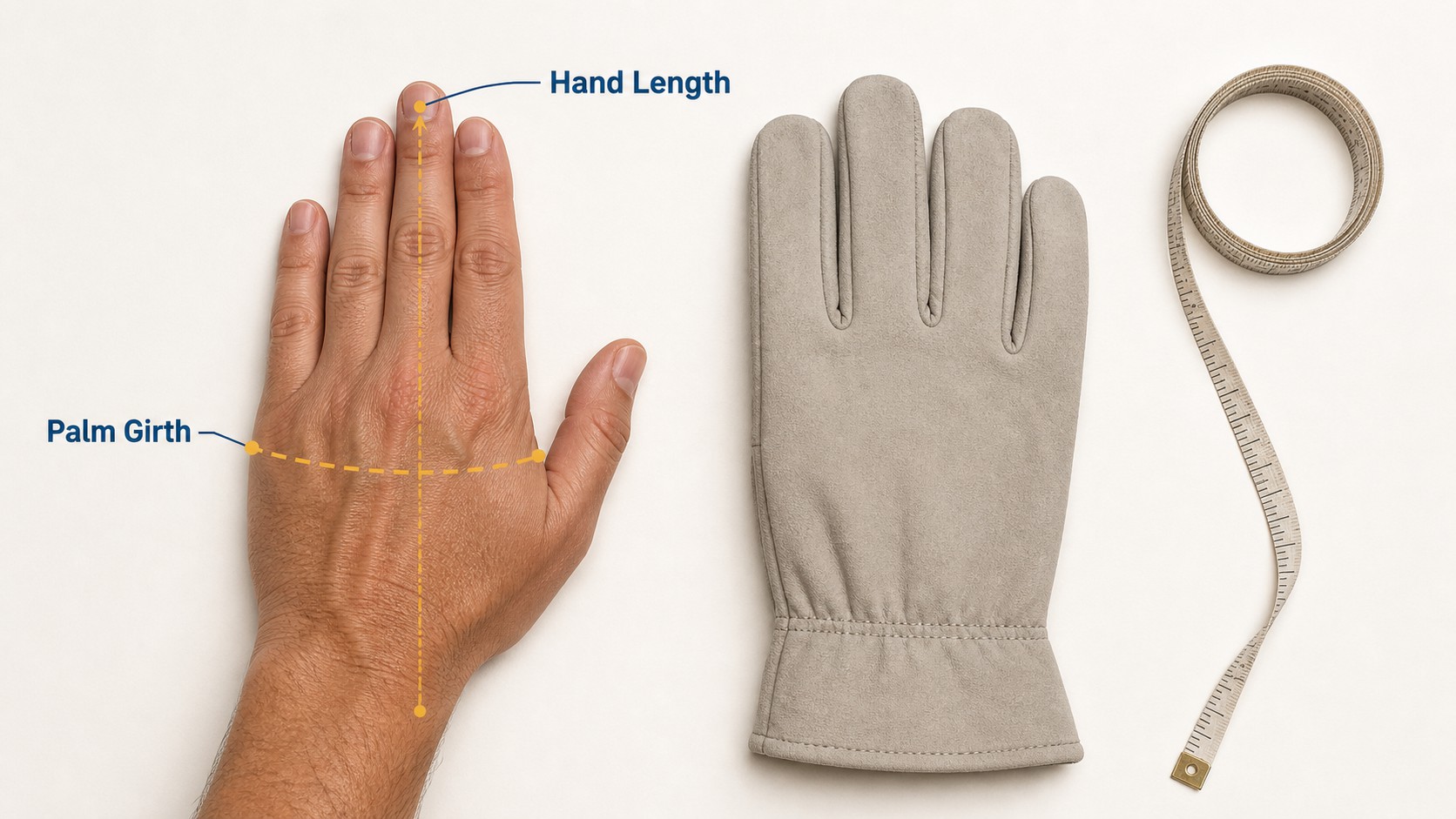
Step 1: Measure Palm Circumference (Primary Measurement)
Wrap a flexible tape measure around the widest part of your palm, just below the knuckles and excluding the thumb. This is the core measurement that determines glove size across all standard systems.
Keep the hand flat and relaxed — not clenched, not spread. The tape should sit snug against the skin without compressing the flesh or leaving gaps. Record the measurement in both inches and centimeters, since different markets and factories use different units.
No tape measure? Use a strip of paper or string, mark where it overlaps, then measure the marked length with a ruler. This method is equally accurate as long as you keep the same snugness.
Step 2: Measure Palm Length (Secondary Check)
Measure from the base of the wrist (where the hand meets the forearm) to the tip of the middle finger. Palm length is the secondary measurement used to confirm or adjust the size indicated by circumference.
If your palm length and palm circumference fall into different size categories, take the larger of the two sizes. This prevents a glove that fits the width but is too short in the fingers — a common cause of fingertip pressure and seam splitting.
Buyer Check: When building a size chart for production, always specify both circumference and length ranges for each size. A chart with only one measurement leaves room for fit failures that QC cannot catch.
Step 3: Match Measurements to a Size Chart
Compare your measurements against the appropriate size chart — men's, women's, or unisex — and select the size that contains both your circumference and length values. If you fall between two sizes, apply the material rule: size down for leather, size up for synthetics.
| Measurement | What It Tells You | Priority |
|---|---|---|
| Palm circumference | Glove width / snugness | Primary |
| Palm length | Finger length / overall coverage | Secondary |
| Dominant hand | Worst-case fit (larger hand) | Always measure this hand |
Factory Tip: For custom production, send your factory a sample size chart with both measurements and ask them to validate against their pattern blocks. Factories often have standard pattern sizes that may need slight adjustment to match your target fit.
How to Build a Size Chart for Custom Glove Production
A production-ready size chart maps palm circumference and length ranges to each size, includes tolerance notes, and specifies the measurement method for quality control. This is the document your factory uses to cut patterns and run fit checks.
What to Include
| Element | Example | Why It Matters |
|---|---|---|
| Size label | M | Identifies the size on packaging and listings |
| Palm circumference range | 21.5-23 cm | Primary cut dimension for the pattern |
| Palm length range | 19-20 cm | Secondary check for finger block length |
| Tolerance | +/- 0.5 cm | Acceptable variation in finished measurement |
| Measurement method | "Circumference at widest point below knuckles, excluding thumb" | Ensures QC measures the same way every time |
| Material | Sheepskin leather | Determines stretch behavior and sizing rule |
How to Communicate Specs to Your Factory
Include the size chart in your tech pack, not as a separate document. This ensures it travels with all other production specs.
Specify the measurement method in writing. A diagram showing where to measure is better than text alone.
Request sample gloves in at least 2-3 sizes and provide fit feedback before bulk approval.
Ask the factory to confirm their pattern blocks match your chart. If their standard blocks differ, they should adjust or flag the discrepancy.
QC Checkpoints for Sizing
Measure finished gloves against the size chart tolerance before packing.
Check both circumference and length — not just one.
Flag any glove outside tolerance for rework or rejection.
Keep a reference sample (approved golden sample) for comparison on every production run.
Glove Leather and Construction Terminology
Understanding glove construction terminology helps you communicate precisely with your factory and evaluate sample quality. The terms below are standard across the glove industry.
| Term | Definition |
|---|---|
| Cabretta | Brazilian sheep leather, known for being thin, soft, and fine-grained. Common in premium dress and driving gloves. |
| Cape / Capeskin | South African sheep leather, a premium thin leather valued for its softness and durability. |
| Clute Cut | A cut pattern with a one-piece palm and no seams at the finger base. Seams run along the inside of the fingers. Provides a roomier fit. |
| Cuff | The wrist portion of the glove that covers the wrist and sometimes the forearm. |
| Fourchette / Gusset | The side panels stitched between fingers to create a three-dimensional finger shape. |
| Gauntlet | An extended cuff that covers the forearm, used for protection in work, ski, and motorcycle gloves. |
| Grain | The outer surface of leather with the original hair side. Full grain retains the natural surface; corrected grain is buffed for uniformity. |
| Gunn Cut | A cut pattern with the seam at the back of the finger base and a seamless palm. Provides a closer, smoother fit. |
| Split | Thick hide split into layers. The top layer is the grain side; the bottom layer is suede on both sides. |
| Welt | A reinforcing leather strip sewn at the thumb base and finger seams to increase durability. |
Why SuhuCustom for Custom Glove Production
SuhuCustom provides OEM/ODM custom apparel manufacturing with sample development in 3-7 days, pattern adjustment for proper fit, and one-to-one export follow-up for buyers who need custom gloves or workwear accessories.
When you need custom gloves manufactured to your size specifications, SuhuCustom supports the process with:
Sample development usually taking 3-7 days, depending on product complexity and material availability
Pattern adjustment to match your size chart, including long-finger variants and custom cuff lengths
Fabric and material sourcing for leather, synthetic, and knit glove constructions
Quality checks including circumference measurement, length verification, and color consistency
Small-batch trial orders to validate fit before committing to full production
Design confidentiality with agreement before production begins
One-to-one export follow-up to ensure order specs are met through to shipment
SuhuCustom is a source apparel factory based in Humen, Dongguan, China, providing factory-direct pricing without trading-company markup. If you are developing a custom glove line or adding gloves to a workwear program, request a sample to validate your size chart before bulk production.
Final CTA
Getting glove sizing right is the difference between a product line that earns repeat orders and one that drowns in returns. The size chart you build today — with both measurements, clear tolerances, and validated samples — is the foundation of every production run that follows.
If you are developing custom gloves or adding them to a workwear program, SuhuCustom can help you validate your size chart through sample development, adjust patterns for proper fit, and run quality checks on every batch. Send us your size specs and material requirements, and we will develop a sample for your approval.